SLIDE 00 · Agent Experience
Side-questing
backwards
Fail fast. Use the exhaust in the next run.
I learn by doing, so the more I do, the more I learn.

SLIDE 01 · The question
A question,
not a product.
Could an Astro site use Kumo without a React rewrite? I built a small solo experiment to learn. It is unsupported and still in progress. A demo is not a release.
THE QUESTION · KUMO + ASTRO The first long run made output, not a support model. That is useful because it shows the questions we still need to answer. ↗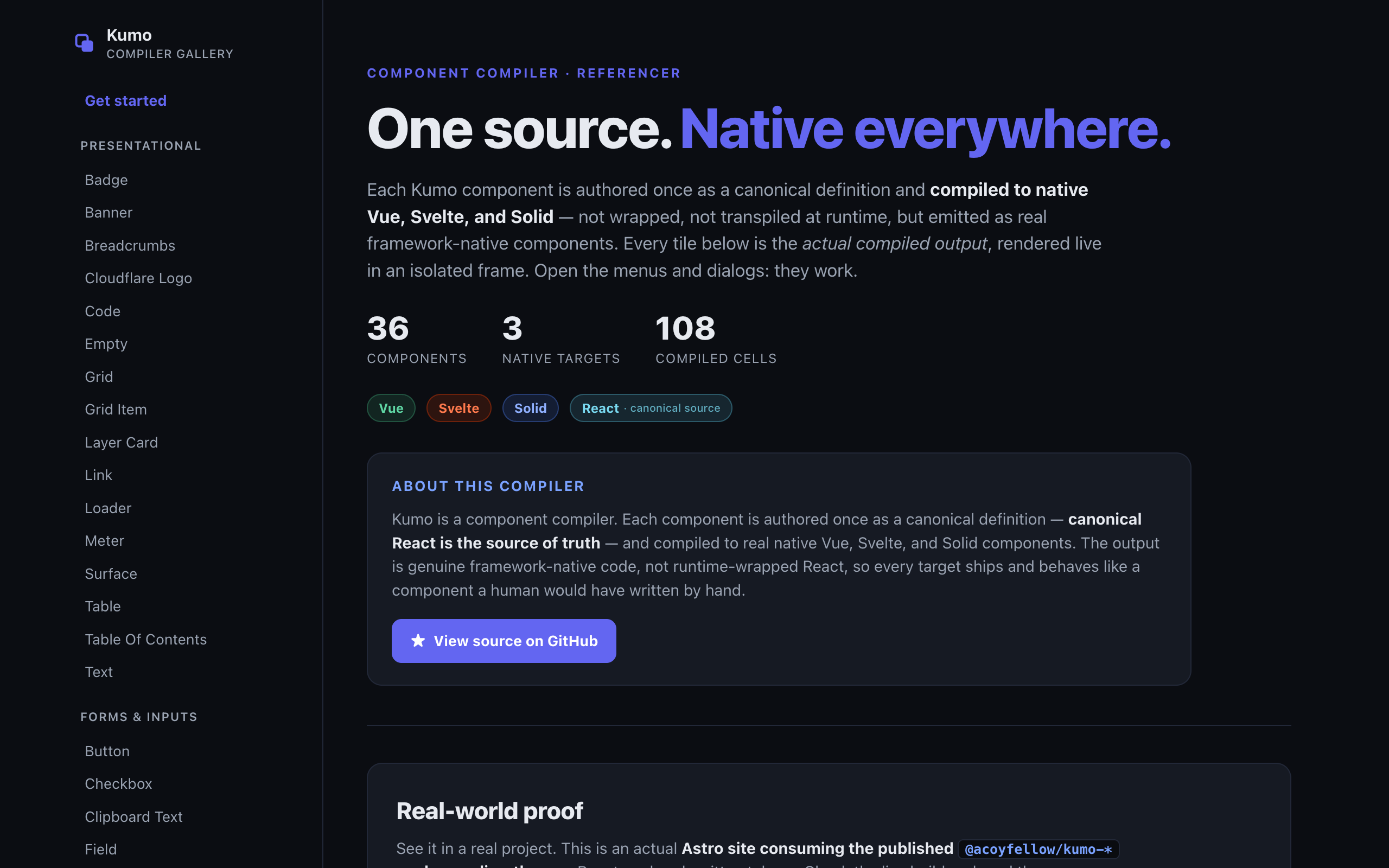
// React Kumo remains the starting point. This experiment does not change it.
SLIDE 04 · The handoff
Hand off only
what earns it.
The useful result today is not a release. It is a small Astro proof and a clear list of what has to be true before anyone should depend on it.
01A repeatable sync pathReact changes have a known way through.
02Known operating costIt is fast and cheap enough to be practical.
03A willing ownerSomeone can take it over and it keeps working.
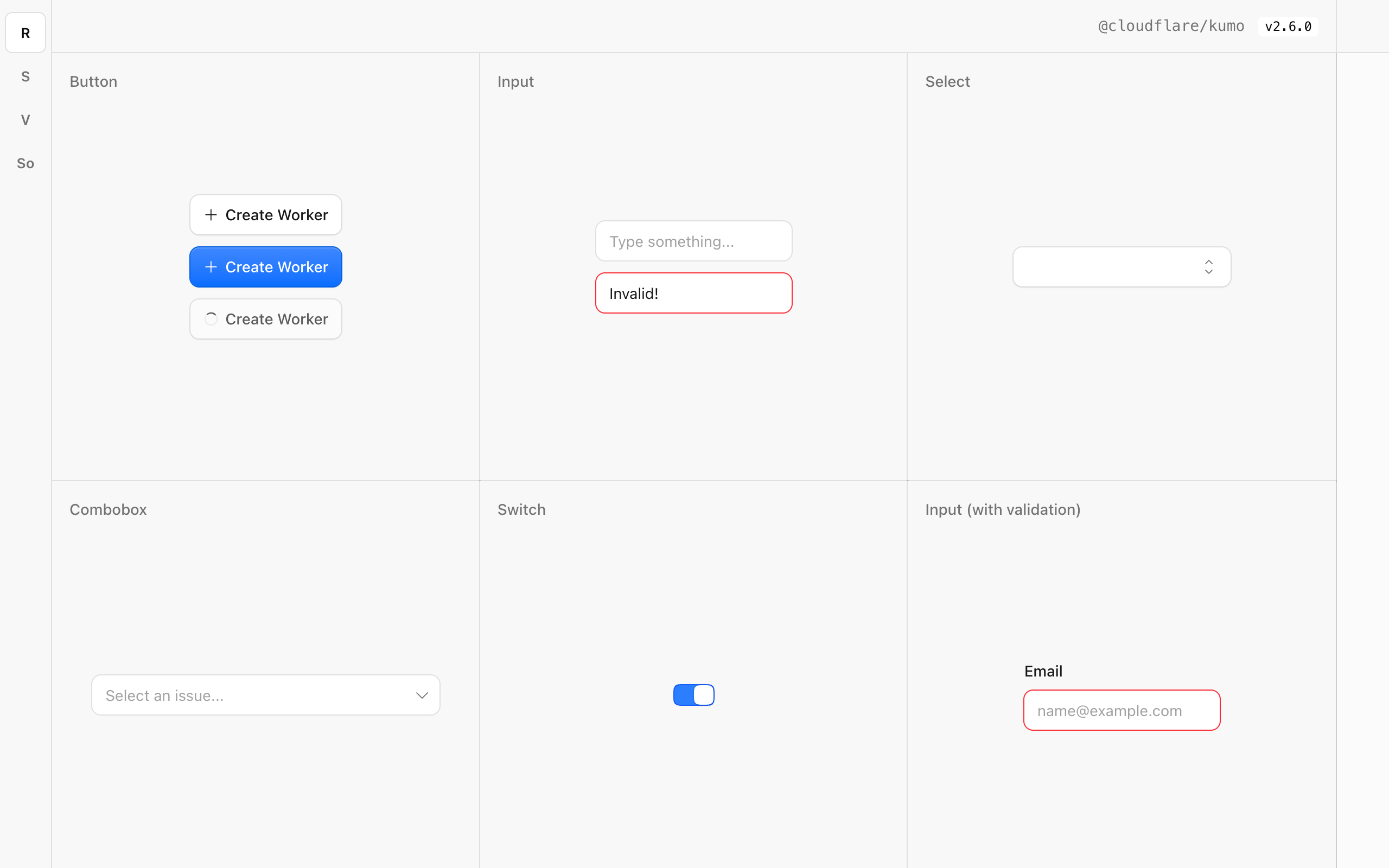
// stacking tokens includes dogfooding: I use my own tokens to build on our primitives. The point is to combine useful pieces into something new, not build another version of the same thing. The receipts make the next decision cheaper.